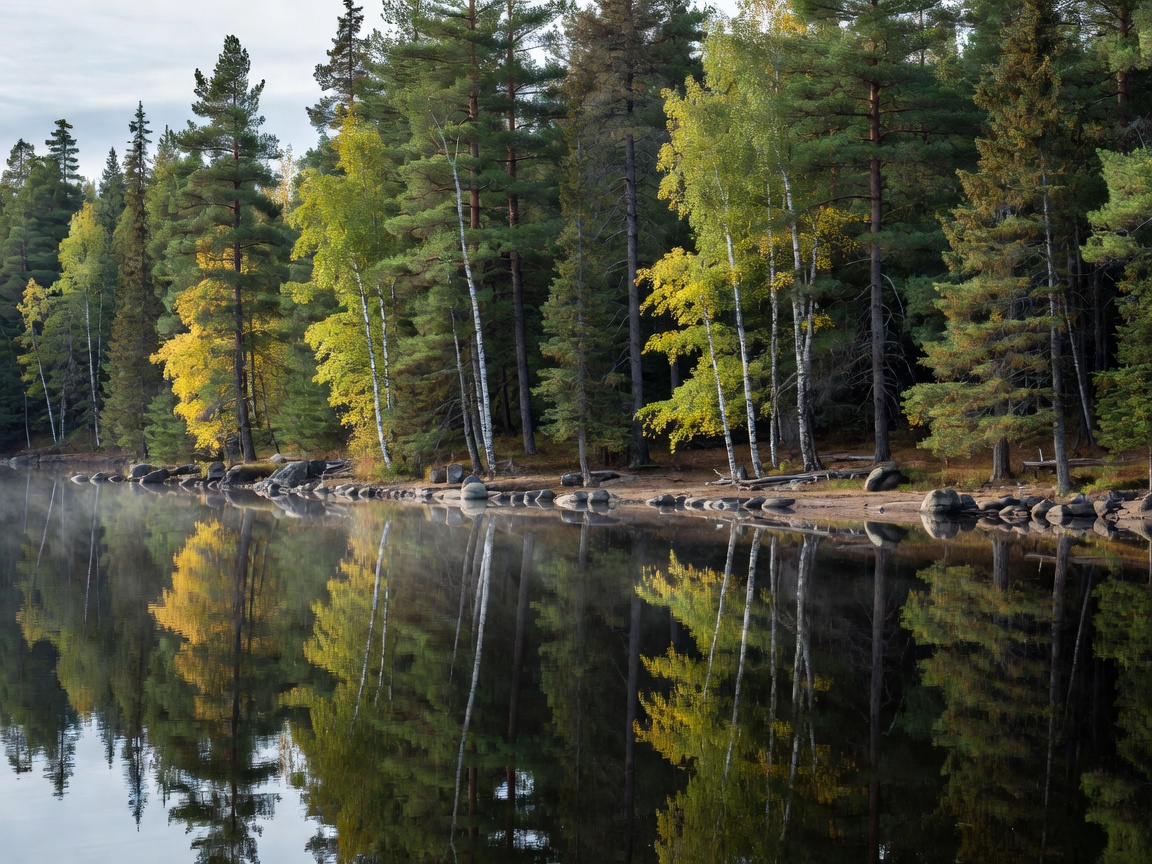
Baltic woodland is not one uniform environment. Tree cover, wet ground, open water, paths and access arrangements vary. Check the immediate setting and current local guidance before choosing an activity.
Read the forest type
Pine forest can have open trunks, a needle-covered floor or dense growth depending on age and management. Birch woodland changes with season and light. Mixed forest combines tree types and often creates varied shade and ground conditions. These broad observations do not identify a specific site or establish public access.
Stay on paths where required or where the ground is vulnerable. Avoid damaging young growth, disturbing habitat or leaving food for wildlife. Do not collect plants, wood or other materials unless local rules clearly permit it. Keep noise controlled, especially near homes and wildlife.
Lakes, wetlands and forest edges
A cabin near water does not guarantee access to a shore, dock, swimming area or boat. Confirm what is available and permitted. Water temperature, wind and shoreline conditions can change quickly. Do not enter water alone or beyond your capability; use current local safety advice and suitable equipment.
Wetlands and soft ground can be difficult to cross and sensitive to disturbance. Use established paths and boardwalks if present. Avoid cutting a new route across wet ground. Keep a safe distance from unstable banks and do not approach wildlife for photographs.
Trails and outdoor movement
Use routes that are clearly identified by the relevant land manager or local authority. This guide does not provide trail names, distances, opening information or access rights. Check current maps and notices before departure. Carry a charged phone and an offline map when appropriate, but do not treat a device as a substitute for route planning.
Set a turnaround point based on daylight, weather, group ability and the return journey. Tell someone your plan if you are heading away from the cabin. Wear footwear suited to the surface and carry a layer for changing conditions. If visibility drops or the route is unclear, stop and reassess rather than pressing on.
Activities by observation, not impact
- Birdwatching: observe quietly from a distance. Do not approach nests or use playback if local guidance prohibits disturbance.
- Photography: keep to durable ground and avoid trampling plants for a better angle.
- Hiking: select a route suited to the group and verify access and current conditions.
- Seasonal outdoor time: daylight, temperature and ground conditions shift across the year. Check current information and plan accordingly.
Foraging, fires, fishing, boating and swimming can be subject to local rules, safety considerations or property-specific restrictions. Do not assume permission from the presence of a forest, lake or fire ring. Check current rules with the responsible local source or property provider.
Season sets the pace
Long summer daylight may offer a wider activity window, while colder seasons bring shorter days and a greater need to plan returns. Spring and autumn can produce variable surfaces and weather. Conditions at a particular site and date require current information. Forecasts are not guarantees; carry equipment appropriate to the conditions and have a lower-impact alternative.
Insects, wind, rain, heat or cold can affect comfort and risk. Bring water, appropriate clothing and any personal medication. Avoid unfamiliar terrain after dark. Keep outdoor plans proportionate to the least experienced person in the group.
Good for
Use this guide to set expectations for a cabin landscape, choose gentle activities and prepare questions about nearby routes or water access.
What to know
- Forest surroundings do not automatically mean open public access.
- Verify route status, local rules and seasonal guidance.
- Protect plants, wildlife, water edges and other visitors.
- Keep plans within the group’s ability and current conditions.
Related field guides
Compare settings in the cabin guide, prepare clothing and supplies with stay planning, and read about responsible access.
General outdoor guidance only. It does not replace current local rules, land-manager advice or safety information.